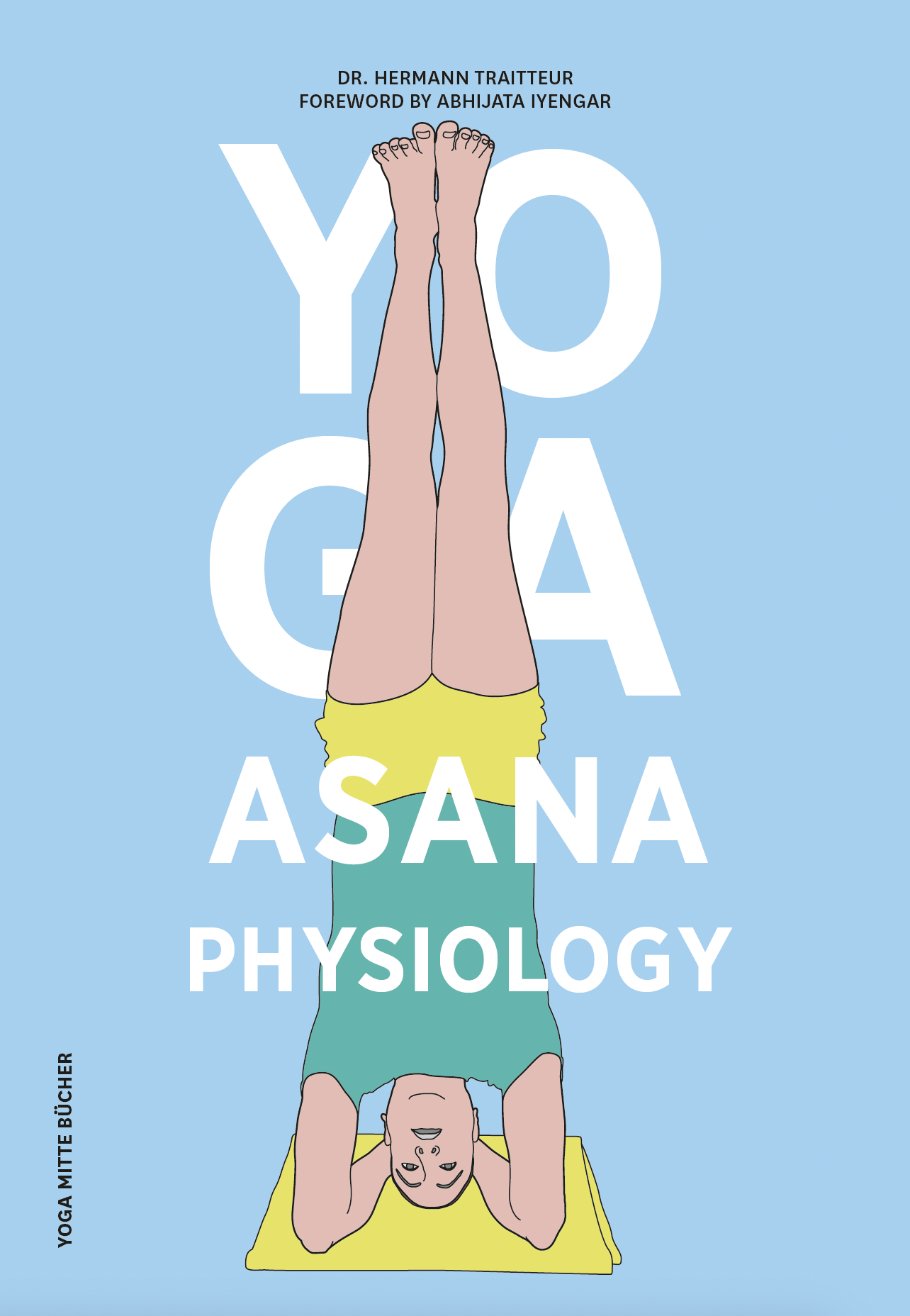
‘Yoga Asana Anatomy’ by Dr. Hermann Traitteur
Yoga Asana Physiology provides a comprehensive understanding of how yoga asanas affect the organs and the physiological systems of the body. Combining modern medical knowledge with the principles of Iyengar Yoga, the book presents complex physiological processes in an accessible and practical way.
________
About the Book:
The book explores the effects of asanas on:
• the respiratory system
• the cardiovascular system
• the digestive system
• the urinary system
• the reproductive system
• the immune system
• the endocrine system
• the nervous system
Each chapter first explains the anatomy and function of the respective organs, their regulatory mechanisms, and the influence of the musculoskeletal system on them. Particular emphasis is placed on understanding how individual asanas and asana sequences affect physiological processes throughout the entire body.
More than 1000 specially created illustrations make even complex relationships easy to understand and help readers connect the content with their own asana practice. The book distinguishes between classical asanas and supported asanas using props, demonstrating how different approaches to practice can lead to different physiological effects.
With its accessible structure, the book is suitable for readers without prior medical knowledge as well as for experienced yoga teachers and professionals working in medical fields. Its unique contribution lies in bringing together the insights of modern physiology and the principles of Iyengar Yoga, presenting their connections in a clear and systematic way. A concluding chapter written by Claudia Böhm broadens this perspective by introducing the viewpoint of Āyurveda.
About the Author:
Dr. Hermann Traitteur grew up in the southern German town of Munich, where in the late 1980s, he first came into contact with Iyengar Yoga. After the fall of the Berlin Wall, he moved to Berlin in 1990, where he studied medicine and began his medical career in an orthopedic clinic. When he was studying medicine in Berlin, he also participated in a Teacher Training Program at the Iyengar Yoga Institute of San Francisco.
Following his certification with the Iyengar Yoga National Association of the United States (IYNAUS), he has furthered his education through annual stays at the Ramamani Iyengar Memorial Yoga Institute (RIMYI) in Pune, India.
In 1994, Hermann Traitteur and Claudia Böhm established Yoga Mitte — the first Iyengar Yoga studio in the former eastern part of Berlin. In the early 2000s, Hermann and Claudia were joined by Annette Herrenleben, who had been studying and assisting under the guidance of the Iyengar family at RIMYI in Pune for more than a decade.
With B.K.S. Iyengar’s blessings, Yoga Mitte was renamed the Iyengar Yoga Institute of Berlin. In addition to teaching regular yoga classes, Hermann Traitteur opened a yoga therapy practice in the same location. Since the end of the 1990s, he has been a lecturer and assessor within the nascent Iyengar Yoga teacher training programs throughout Germany. His dissertation, published in 2012, is a study of the effects of Iyengar Yoga on chronic neck pain.